
Before going on maternity leave, I went searching for maternity clothes that actually fit and headed to my favorite thrift store hoping to find a few pieces I needed. But after searching rack after rack, I realized there was almost nothing there. At first, it seemed strange, but then I realized why: women have created their own systems rooted in connection, community, and care.
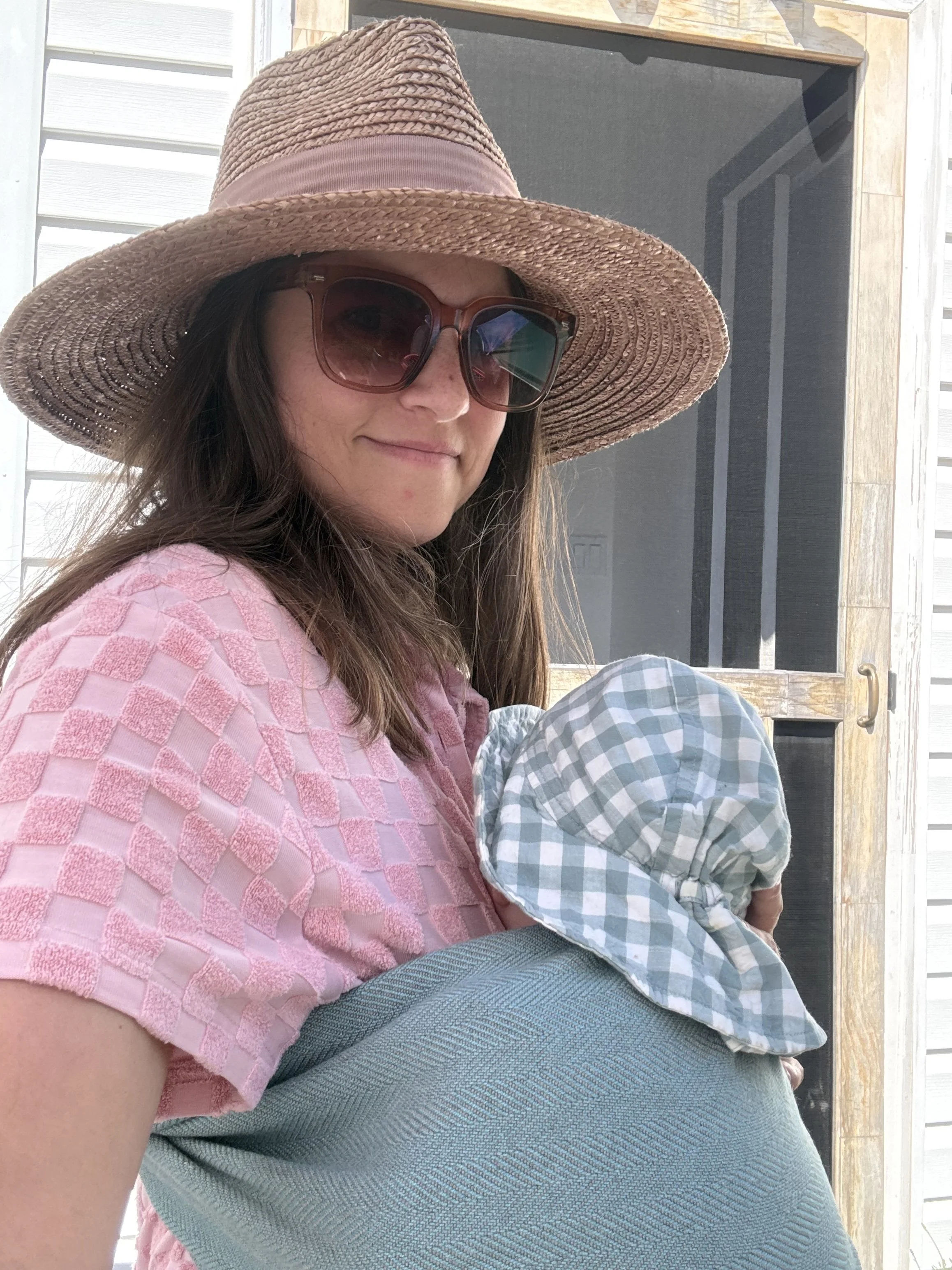
If you’ve ever searched thrift stores for maternity jeans, nursing tops, or pregnancy dresses, you’ve probably noticed the same thing: there often isn’t much to be found. Pregnancy is temporary, and maternity clothes are usually only worn for a short season. Logic would suggest thrift stores should be overflowing with them, but they’re not.
Maybe that tells us something about clothing and community. Throughout history, women have worked together around textiles, and this is no exception.
Women have created an unofficial tradition of passing maternity clothes directly to one another. One woman finishes her pregnancy and hands bins of carefully folded clothes to a cousin. A sister saves her favorite leggings “just in case someone needs them.” A coworker quietly drops off a bag at another woman’s doorstep after hearing she’s expecting.
These clothes rarely become “discarded.” Instead, they become part of a community system where people pay attention to what the needs are around them and step in to help fill them. There’s an understanding that what one person no longer needs, someone else likely does. The clothes are cared for, preserved, and passed along when the time comes.
There’s something deeply human about the idea of taking care of one another through clothing.
Maternity clothes carry memory. They hold the shape of a changing body, the anticipation of a new life, the exhaustion and hope of becoming a mother. Even inexpensive pieces suddenly feel meaningful because of the season they accompanied.
So instead of treating them like disposable fashion, women often preserve their value through community.
And it raises an interesting question: What would happen if we treated more of our belongings, especially clothing this way?
Not just maternity clothes, tools, books, furniture, kitchen appliances, formal wear, toys, craft supplies—everything that spends most of its life sitting unused after a brief season of importance.
Modern consumer culture teaches us ownership is individual and temporary. Buy it new. Use it alone. Throw it away. Replace it. But women passing maternity clothes around are quietly practicing a different economy entirely—one based on stewardship instead of consumption.
An economy of circulation.

Imagine neighborhoods where items flowed naturally between people who needed them. Imagine if instead of every family buying every single thing from scratch, communities built networks of trust and exchange. Less waste. Less financial pressure. More connection.
The truth is, maternity clothes are expensive for something used only for a few months. Women figured this out long ago. Instead of endlessly repurchasing, they built informal systems of sharing. No app required. No startup disrupting the industry. Just relationships.
And those relationships matter.
Receiving a box of maternity clothes from another woman rarely feels transactional. It feels supportive. Like someone saying, “I’ve been where you are. You’re not alone.” The clothes themselves become secondary to the care attached to them.
That emotional value is something thrift stores can’t always replicate.
There’s also a lesson here about how we assign worth. In many parts of society, value is tied to resale price or trendiness. But maternity clothes often hold value because they were useful, comforting, and connected to real life. Their worth is relational.
Maybe we need more of that perspective.
What if we measured value not by scarcity or status, but by how well something serves people over time?
The women quietly passing maternity clothes (and baby clothes) from home to home may never think of themselves as participating in a cultural philosophy. But in a way, they are. They’re modeling sustainability without branding it that way. They’re practicing mutual aid without calling it activism. They’re preserving dignity, memory, and usefulness all at once.
And perhaps the most remarkable part is how ordinary it all feels.
No headlines. No recognition. Just women taking care of each other the way they always have.
Maybe the future of a less wasteful, more connected world doesn’t begin with massive systems or complicated technology.
Maybe it begins with a tote bag full of maternity clothes sitting in the back of someone’s closet, waiting for the next woman who needs them.
